NIO 编程
1 NIO 基本介绍
Java NIO全称Java non-blocking IO,是指JDK提供的新API。从JDK1.4开始,Java提供了一系列改进的输入/输出的新特性,被统称为NIO(即NewIO),是同步非阻塞的。NIO相关类都被放在java.nio包及子包下,并且对原java.io包中的很多类进行改写。【基本案例】NIO有三大核心部分:Channel(通道)、Buffer(缓冲区)、Selector(选择器) 。NIO是面向缓冲区,或者面向块编程的。数据读取到一个它稍后处理的缓冲区,需要时可在缓冲区中前后移动,这就增加了处理过程中的灵活性,使用它可以提供非阻塞式的高伸缩性网络。Java NIO的非阻塞模式,使一个线程从某通道发送请求或者读取数据,但是它仅能得到目前可用的数据,如果目前没有数据可用时,就什么都不会获取,而不是保持线程阻塞,所以直至数据变的可以读取之前,该线程可以继续做其他的事情。非阻塞写也是如此,一个线程请求写入一些数据到某通道,但不需要等待它完全写入,这个线程同时可以去做别的事情。【后面有案例说明】- 通俗理解:
NIO是可以做到用一个线程来处理多个操作的。假设有10000个请求过来,根据实际情况,可以分配50或者100个线程来处理。不像之前的阻塞IO那样,非得分配10000个。 HTTP 2.0使用了多路复用的技术,做到同一个连接并发处理多个请求,而且并发请求的数量比HTTP 1.1大了好几个数量级。- 案例说明
NIO的Buffer
import java.nio.IntBuffer;

public class BasicBuffer {

    public static void main(String[] args) {

        //举例说明 Buffer 的使用(简单说明)
        //创建一个 Buffer,大小为 5,即可以存放 5 个 int
        IntBuffer intBuffer = IntBuffer.allocate(5);

        //向buffer存放数据
        //intBuffer.put(10);
        //intBuffer.put(11);
        //intBuffer.put(12);
        //intBuffer.put(13);
        //intBuffer.put(14);
        for (int i = 0; i < intBuffer.capacity(); i++) {
            intBuffer.put(i * 2);
        }
        //如何从 buffer 读取数据
        //将 buffer 转换,读写切换(!!!)
        intBuffer.flip();
        while (intBuffer.hasRemaining()) {
            System.out.println(intBuffer.get());
        }
    }
}
2 NIO 和 BIO 的比较
BIO以流的方式处理数据,而NIO以块的方式处理数据,块I/O的效率比流I/O高很多。BIO是阻塞的,NIO则是非阻塞的。BIO基于字节流和字符流进行操作,而NIO基于Channel(通道)和Buffer(缓冲区)进行操作,数据总是从通道读取到缓冲区中,或者从缓冲区写入到通道中。Selector(选择器)用于监听多个通道的事件(比如:连接请求,数据到达等),因此使用单个线程就可以监听多个客户端通道。
3 NIO 三大核心原理示意图
一张图描述 NIO 的 Selector、Channel 和 Buffer 的关系。
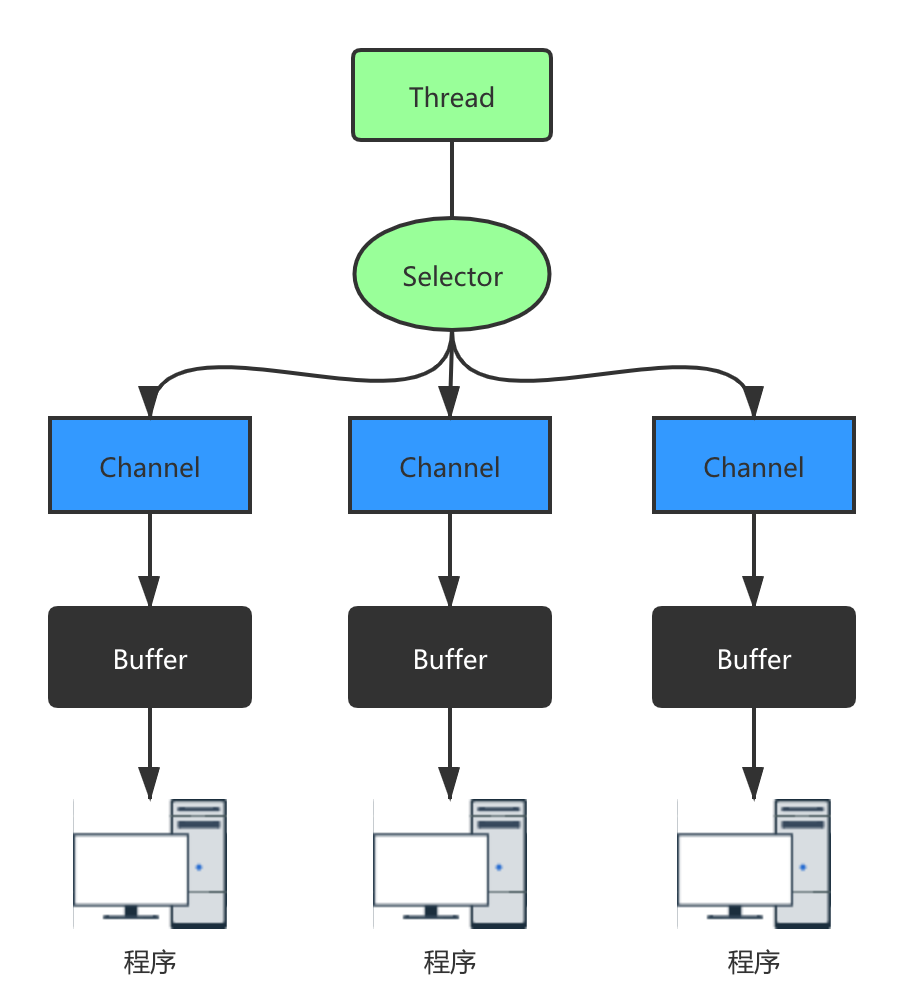
- 每个
Channel都会对应一个Buffer。 Selector对应一个线程,一个线程对应多个Channel(连接)。- 该图反应了有三个
Channel注册到该Selector//程序 - 程序切换到哪个
Channel是由事件决定的,Event就是一个重要的概念。 Selector会根据不同的事件,在各个通道上切换。Buffer就是一个内存块,底层是有一个数组。- 数据的读取写入是通过
Buffer,这个和BIO,BIO中要么是输入流,或者是输出流,不能双向,但是NIO的Buffer是可以读也可以写,需要flip方法切换Channel是双向的,可以返回底层操作系统的情况,比如Linux,底层的操作系统通道就是双向的。
4 缓冲区(Buffer)
4.1 基本介绍
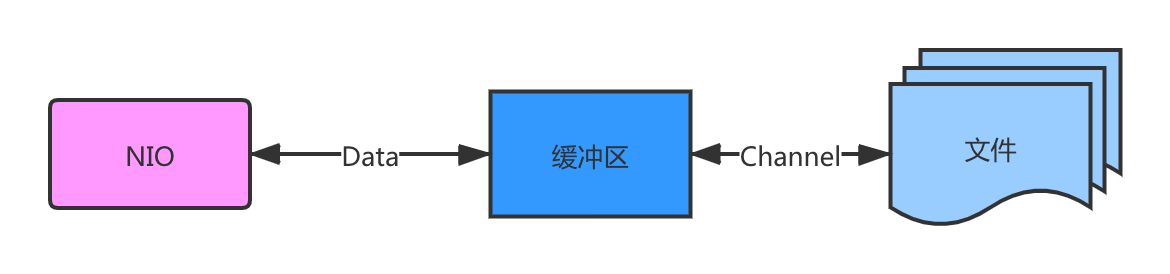
缓冲区(Buffer):缓冲区本质上是一个可以读写数据的内存块,可以理解成是一个容器对象(含数组),该对象提供了一组方法,可以更轻松地使用内存块,,缓冲区对象内置了一些机制,能够跟踪和记录缓冲区的状态变化情况。Channel 提供从文件、网络读取数据的渠道,但是读取或写入的数据都必须经由 Buffer,如图:【后面举例说明】
4.2 Buffer 类及其子类
在
NIO中,Buffer是一个顶层父类,它是一个抽象类,类的层级关系:- ByteBuffer
- MappedByteBuffer
- DirectByteBuffer
- HeapByteBuffer
- ShortBuffer
- IntBuffer
- LongBuffer
- FloatBuffer
- DoubleBuffer
- CharBuffer
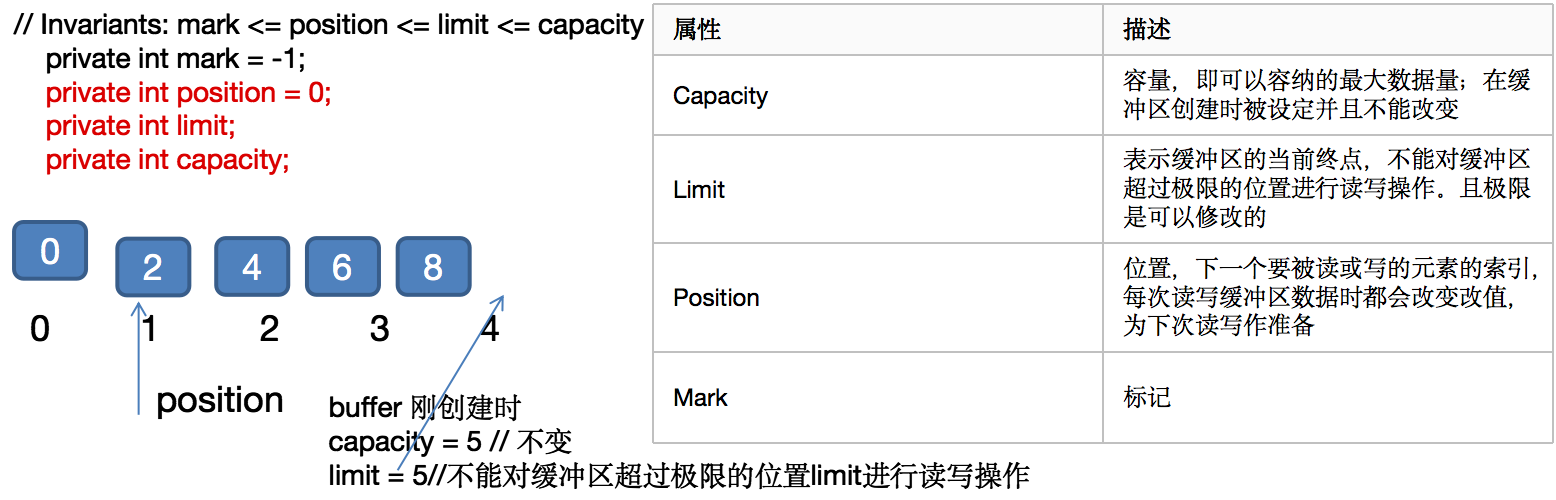
Buffer类定义了所有的缓冲区都具有的四个属性来提供关于其所包含的数据元素的信息:
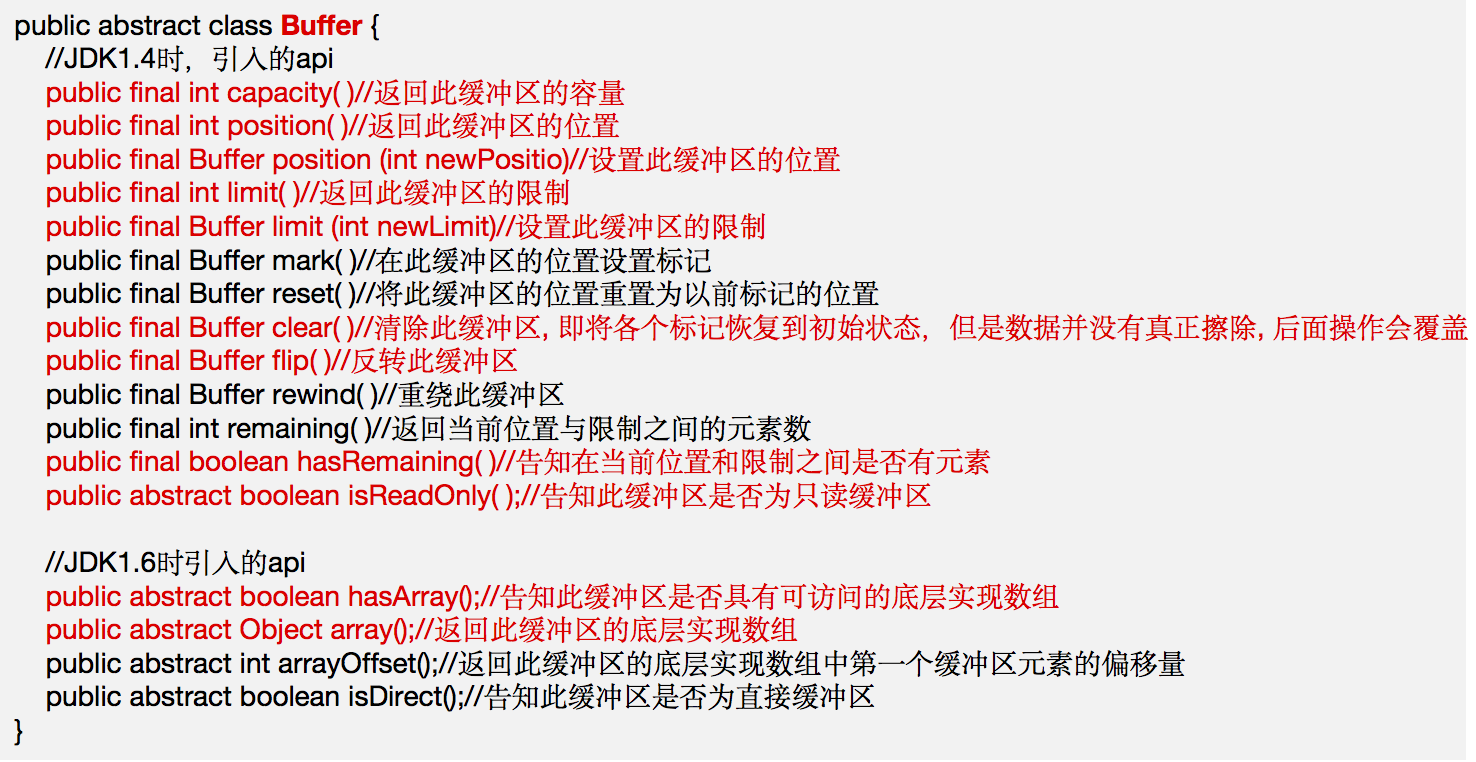
Buffer类相关方法一览
4.3 ByteBuffer
从前面可以看出对于 Java 中的基本数据类型(boolean 除外),都有一个 Buffer 类型与之相对应,最常用的自然是 ByteBuffer 类(二进制数据),该类的主要方法如下:
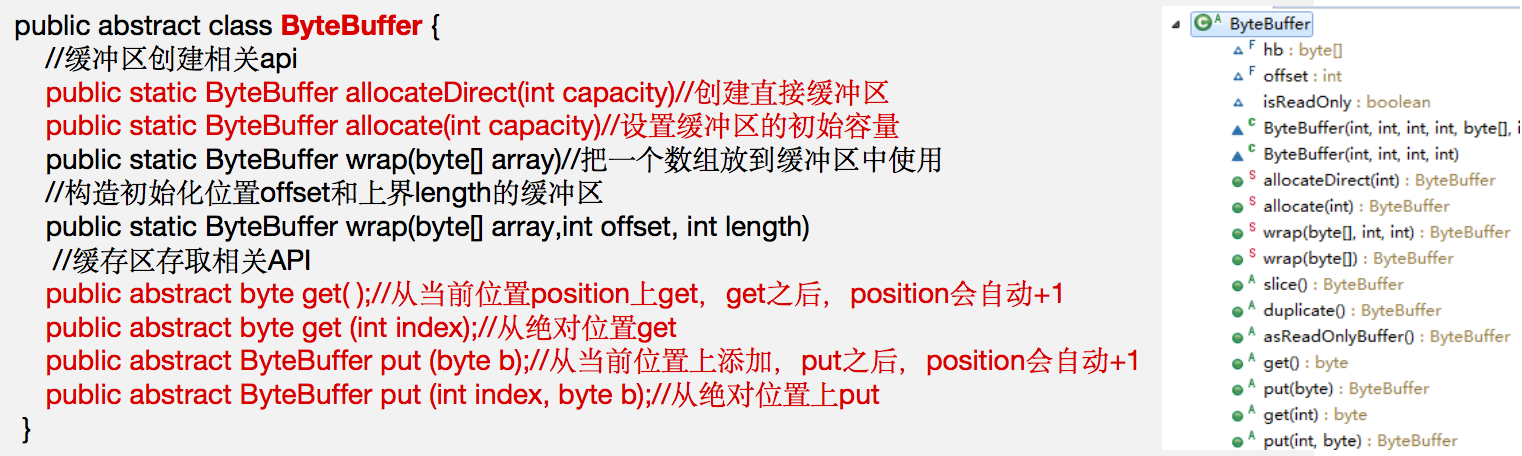
5 通道(Channel)
channel 有一点类似于 stream,它就是读写数据的双向通道,可以从 channel 将数据读入 buffer,也可以将 buffer 的数据写入 channel,而之前的 stream 要么是输入,要么是输出,channel 比 stream 更为底层
常见的 Channel 有
- FileChannel
- DatagramChannel
- SocketChannel
- ServerSocketChannel
6 基本介绍
- NIO 的通道类似于流,但有些区别如下:
- 通道可以同时进行读写,而流只能读或者只能写
- 通道可以实现异步读写数据
- 通道可以从缓冲读数据,也可以写数据到缓冲:
BIO中的Stream是单向的,例如FileInputStream对象只能进行读取数据的操作,而NIO中的通道(Channel)是双向的,可以读操作,也可以写操作。Channel在NIO中是一个接口public interface Channel extends Closeable{}- 常用的
Channel类有:FileChannel、DatagramChannel、ServerSocketChannel和SocketChannel。【ServerSocketChanne类似ServerSocket、SocketChannel类似Socket】 FileChannel用于文件的数据读写,DatagramChannel用于UDP的数据读写,ServerSocketChannel和SocketChannel用于TCP的数据读写。- 图示
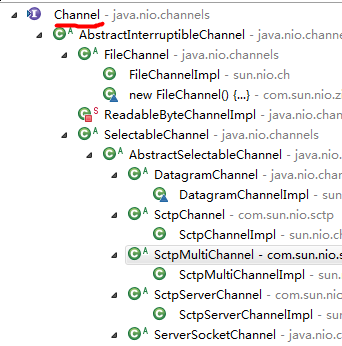
6.1 FileChannel 类
FileChannel 主要用来对本地文件进行 IO 操作,常见的方法有
public int read(ByteBuffer dst),从通道读取数据并放到缓冲区中public int write(ByteBuffer src),把缓冲区的数据写到通道中public long transferFrom(ReadableByteChannel src, long position, long count),从目标通道中复制数据到当前通道public long transferTo(long position, long count, WritableByteChannel target),把数据从当前通道复制给目标通道
6.2 应用实例1 - 本地文件写数据
实例要求:
- 使用前面学习后的
ByteBuffer(缓冲)和FileChannel(通道),将 “hello,尚硅谷” 写入到file01.txt中 - 文件不存在就创建
- 代码演示
import java.io.FileOutputStream;
import java.nio.ByteBuffer;
import java.nio.channels.FileChannel;

public class NIOFileChannel01 {

    public static void main(String[] args) throws Exception {
        String str = "hello";
        //创建一个输出流 -> channel
        FileOutputStream fileOutputStream = new FileOutputStream("d:\\file01.txt");

        //通过 fileOutputStream 获取对应的 FileChannel
        //这个 fileChannel 真实类型是 FileChannelImpl
        FileChannel fileChannel = fileOutputStream.getChannel();

        //创建一个缓冲区 ByteBuffer
        ByteBuffer byteBuffer = ByteBuffer.allocate(1024);

        //将 str 放入 byteBuffer
        byteBuffer.put(str.getBytes());

        //对 byteBuffer 进行 flip
        byteBuffer.flip();

        //将 byteBuffer 数据写入到 fileChannel
        fileChannel.write(byteBuffer);
        fileOutputStream.close();
    }
}
6.3 应用实例2 - 本地文件读数据
实例要求:
- 使用前面学习后的
ByteBuffer(缓冲)和FileChannel(通道),将file01.txt中的数据读入到程序,并显示在控制台屏幕 - 假定文件已经存在
- 代码演示
import java.io.File;
import java.io.FileInputStream;
import java.nio.ByteBuffer;
import java.nio.channels.FileChannel;

public class NIOFileChannel02 {

    public static void main(String[] args) throws Exception {

        //创建文件的输入流
        File file = new File("d:\\file01.txt");
        FileInputStream fileInputStream = new FileInputStream(file);

        //通过 fileInputStream 获取对应的 FileChannel -> 实际类型 FileChannelImpl
        FileChannel fileChannel = fileInputStream.getChannel();

        //创建缓冲区
        ByteBuffer byteBuffer = ByteBuffer.allocate((int)file.length());

        //将通道的数据读入到 Buffer
        fileChannel.read(byteBuffer);

        //将 byteBuffer 的字节数据转成 String
        System.out.println(new String(byteBuffer.array()));
        fileInputStream.close();
    }
}
6.4 应用实例3 - 使用一个 Buffer 完成文件读取、写入
实例要求:
- 使用
FileChannel(通道)和方法read、write,完成文件的拷贝 - 拷贝一个文本文件
1.txt,放在项目下即可 - 代码演示

import java.io.FileInputStream;
import java.io.FileOutputStream;
import java.nio.ByteBuffer;
import java.nio.channels.FileChannel;

public class NIOFileChannel03 {

    public static void main(String[] args) throws Exception {

        FileInputStream fileInputStream = new FileInputStream("1.txt");
        FileChannel fileChannel01 = fileInputStream.getChannel();
        FileOutputStream fileOutputStream = new FileOutputStream("2.txt");
        FileChannel fileChannel02 = fileOutputStream.getChannel();

        ByteBuffer byteBuffer = ByteBuffer.allocate(512);

        while (true) { //循环读取

            //这里有一个重要的操作,一定不要忘了
            /*
            public final Buffer clear() {
                position = 0;
                limit = capacity;
                mark = -1;
                return this;
            }
            */
            byteBuffer.clear(); //清空 buffer
            int read = fileChannel01.read(byteBuffer);
            System.out.println("read = " + read);
            if (read == -1) { //表示读完
                break;
            }

            //将 buffer 中的数据写入到 fileChannel02--2.txt
            byteBuffer.flip();
            fileChannel02.write(byteBuffer);
        }

        //关闭相关的流
        fileInputStream.close();
        fileOutputStream.close();
    }
}
6.5 应用实例4 - 拷贝文件 transferFrom 方法
- 实例要求:
- 使用
FileChannel(通道)和方法transferFrom,完成文件的拷贝 - 拷贝一张图片
- 代码演示
import java.io.FileInputStream;
import java.io.FileOutputStream;
import java.nio.channels.FileChannel;

public class NIOFileChannel04 {

    public static void main(String[] args) throws Exception {

        //创建相关流
        FileInputStream fileInputStream = new FileInputStream("d:\\a.jpg");
        FileOutputStream fileOutputStream = new FileOutputStream("d:\\a2.jpg");

        //获取各个流对应的 FileChannel
        FileChannel sourceCh = fileInputStream.getChannel();
        FileChannel destCh = fileOutputStream.getChannel();

        //使用 transferForm 完成拷贝
        destCh.transferFrom(sourceCh, 0, sourceCh.size());

        //关闭相关通道和流
        sourceCh.close();
        destCh.close();
        fileInputStream.close();
        fileOutputStream.close();
    }
}
6.6 关于 Buffer 和 Channel 的注意事项和细节
ByteBuffer支持类型化的put和get,put放入的是什么数据类型,get就应该使用相应的数据类型来取出,否则可能有BufferUnderflowException异常。【举例说明】
import java.nio.ByteBuffer;

public class NIOByteBufferPutGet {

    public static void main(String[] args) {

        //创建一个 Buffer
        ByteBuffer buffer = ByteBuffer.allocate(64);

        //类型化方式放入数据
        buffer.putInt(100);
        buffer.putLong(9);
        buffer.putChar('尚');
        buffer.putShort((short) 4);

        //取出
        buffer.flip();

        System.out.println();

        System.out.println(buffer.getInt());
        System.out.println(buffer.getLong());
        System.out.println(buffer.getChar());
        System.out.println(buffer.getShort());
    }
}- 可以将一个普通
Buffer转成只读Buffer【举例说明】
import java.nio.ByteBuffer;

public class ReadOnlyBuffer {

    public static void main(String[] args) {

        //创建一个 buffer
        ByteBuffer buffer = ByteBuffer.allocate(64);

        for (int i = 0; i < 64; i++) {
            buffer.put((byte) i);
        }

        //读取
        buffer.flip();

        //得到一个只读的 Buffer
        ByteBuffer readOnlyBuffer = buffer.asReadOnlyBuffer();
        System.out.println(readOnlyBuffer.getClass());

        //读取
        while (readOnlyBuffer.hasRemaining()) {
            System.out.println(readOnlyBuffer.get());
        }

        readOnlyBuffer.put((byte) 100); //ReadOnlyBufferException
    }
}NIO还提供了MappedByteBuffer,可以让文件直接在内存(堆外的内存)中进行修改,而如何同步到文件由NIO来完成。【举例说明】
import java.io.RandomAccessFile;
import java.nio.MappedByteBuffer;
import java.nio.channels.FileChannel;

/**
 * 说明 1.MappedByteBuffer 可让文件直接在内存(堆外内存)修改,操作系统不需要拷贝一次
 */
public class MappedByteBufferTest {

    public static void main(String[] args) throws Exception {

        RandomAccessFile randomAccessFile = new RandomAccessFile("1.txt", "rw");
        //获取对应的通道
        FileChannel channel = randomAccessFile.getChannel();

        /**
         * 参数 1:FileChannel.MapMode.READ_WRITE 使用的读写模式
         * 参数 2:0:可以直接修改的起始位置
         * 参数 3:5: 是映射到内存的大小(不是索引位置),即将 1.txt 的多少个字节映射到内存
         * 可以直接修改的范围就是 0-5
         * 实际类型 DirectByteBuffer
         */
        MappedByteBuffer mappedByteBuffer = channel.map(FileChannel.MapMode.READ_WRITE, 0, 5);

        mappedByteBuffer.put(0, (byte) 'H');
        mappedByteBuffer.put(3, (byte) '9');
        mappedByteBuffer.put(5, (byte) 'Y');//IndexOutOfBoundsException

        randomAccessFile.close();
        System.out.println("修改成功~~");
    }
}- 前面我们讲的读写操作,都是通过一个
Buffer完成的,NIO还支持通过多个Buffer(即Buffer数组)完成读写操作,即Scattering和Gathering【举例说明】
import java.net.InetSocketAddress;
import java.nio.ByteBuffer;
import java.nio.channels.ServerSocketChannel;
import java.nio.channels.SocketChannel;
import java.util.Arrays;

/**
 * Scattering:将数据写入到 buffer 时,可以采用 buffer 数组,依次写入 [分散]
 * Gathering:从 buffer 读取数据时,可以采用 buffer 数组,依次读
 */
public class ScatteringAndGatheringTest {

    public static void main(String[] args) throws Exception {

        //使用 ServerSocketChannel 和 SocketChannel 网络
        ServerSocketChannel serverSocketChannel = ServerSocketChannel.open();
        InetSocketAddress inetSocketAddress = new InetSocketAddress(7000);

        //绑定端口到 socket,并启动
        serverSocketChannel.socket().bind(inetSocketAddress);

        //创建 buffer 数组
        ByteBuffer[] byteBuffers = new ByteBuffer[2];
        byteBuffers[0] = ByteBuffer.allocate(5);
        byteBuffers[1] = ByteBuffer.allocate(3);

        //等客户端连接 (telnet)
        SocketChannel socketChannel = serverSocketChannel.accept();

        int messageLength = 8; //假定从客户端接收 8 个字节

        //循环的读取
        while (true) {
            int byteRead = 0;

            while (byteRead < messageLength) {
                long l = socketChannel.read(byteBuffers);
                byteRead += l; //累计读取的字节数
                System.out.println("byteRead = " + byteRead);
                //使用流打印,看看当前的这个 buffer 的 position 和 limit
                Arrays.asList(byteBuffers).stream().map(buffer -> "position = " + buffer.position() + ", limit = " + buffer.limit()).forEach(System.out::println);
            }

            //将所有的 buffer 进行 flip
            Arrays.asList(byteBuffers).forEach(buffer -> buffer.flip());
            //将数据读出显示到客户端
            long byteWirte = 0;
            while (byteWirte < messageLength) {
                long l = socketChannel.write(byteBuffers);//
                byteWirte += l;
            }

            //将所有的buffer进行clear
            Arrays.asList(byteBuffers).forEach(buffer -> {
                buffer.clear();
            });

            System.out.println("byteRead = " + byteRead + ", byteWrite = " + byteWirte + ", messagelength = " + messageLength);
        }
    }
}
7 Selector(选择器)
7.1 基本介绍
Java的NIO,用非阻塞的IO方式。可以用一个线程,处理多个的客户端连接,就会使用到Selector(选择器)。Selector能够检测多个注册的通道上是否有事件发生(注意:多个Channel以事件的方式可以注册到同一个Selector),如果有事件发生,便获取事件然后针对每个事件进行相应的处理。这样就可以只用一个单线程去管理多个通道,也就是管理多个连接和请求。【示意图】- 只有在连接/通道真正有读写事件发生时,才会进行读写,就大大地减少了系统开销,并且不必为每个连接都创建一个线程,不用去维护多个线程。
- 避免了多线程之间的上下文切换导致的开销。
7.2 Selector 示意图和特点说明
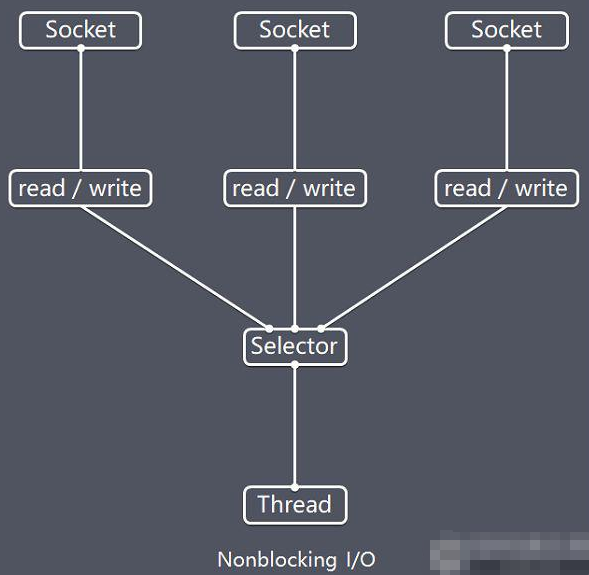
说明如下:
Netty的IO线程NioEventLoop聚合了Selector(选择器,也叫多路复用器),可以同时并发处理成百上千个客户端连接。- 当线程从某客户端
Socket通道进行读写数据时,若没有数据可用时,该线程可以进行其他任务。 - 线程通常将非阻塞
IO的空闲时间用于在其他通道上执行IO操作,所以单独的线程可以管理多个输入和输出通道。 - 由于读写操作都是非阻塞的,这就可以充分提升
IO线程的运行效率,避免由于频繁I/O阻塞导致的线程挂起。 - 一个
I/O线程可以并发处理N个客户端连接和读写操作,这从根本上解决了传统同步阻塞I/O一连接一线程模型,架构的性能、弹性伸缩能力和可靠性都得到了极大的提升。
7.3 Selector 类相关方法
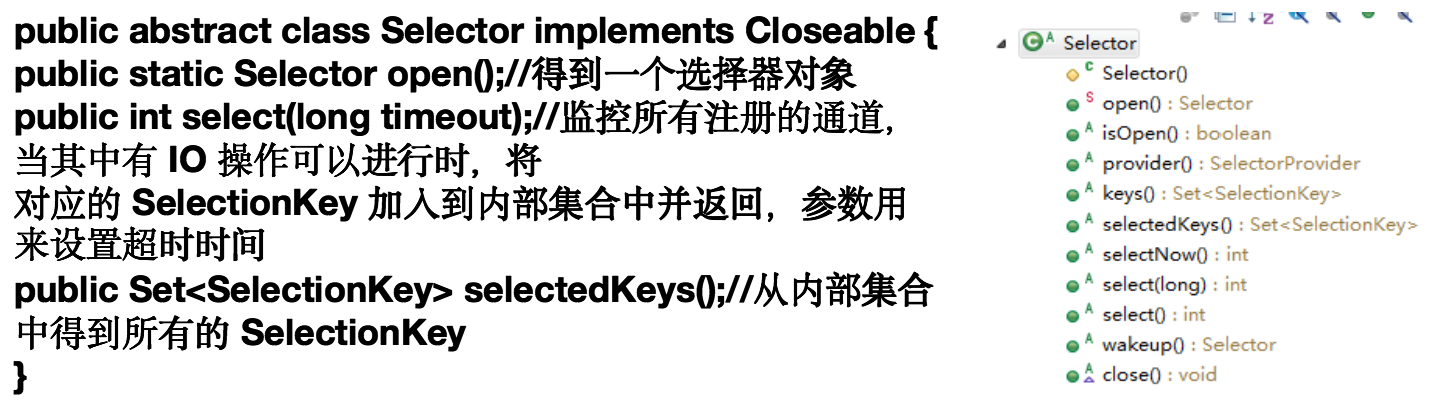
7.4 注意事项
NIO中的ServerSocketChannel功能类似ServerSocket、SocketChannel功能类似Socket。- Selector相关方法说明
selector.select();//阻塞selector.select(1000);//阻塞 1000 毫秒,在 1000 毫秒后返回selector.wakeup();//唤醒 selectorselector.selectNow();//不阻塞,立马返还
8 NIO 非阻塞网络编程原理分析图
NIO 非阻塞网络编程相关的(Selector、SelectionKey、ServerScoketChannel 和 SocketChannel)关系梳理图
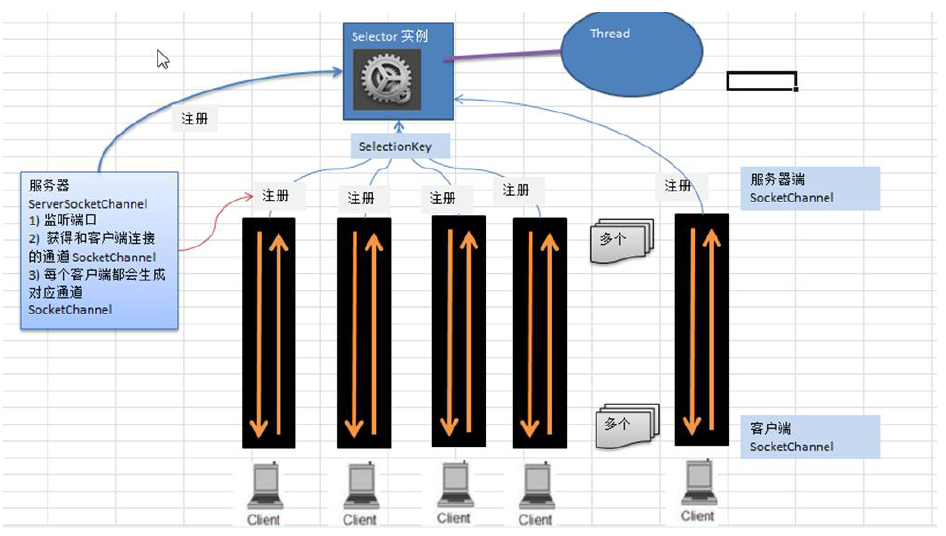
对上图的说明:
- 当客户端连接时,会通过
ServerSocketChannel得到SocketChannel。 Selector进行监听select方法,返回有事件发生的通道的个数。- 将
socketChannel注册到Selector上,register(Selector sel, int ops),一个Selector上可以注册多个SocketChannel。 - 注册后返回一个
SelectionKey,会和该Selector关联(集合)。 - 进一步得到各个
SelectionKey(有事件发生)。 - 在通过
SelectionKey反向获取SocketChannel,方法channel()。 - 可以通过得到的
channel,完成业务处理。 - 代码撑腰。。。
9 NIO 非阻塞网络编程快速入门
案例要求:
- 编写一个
NIO入门案例,实现服务器端和客户端之间的数据简单通讯(非阻塞) - 目的:理解
NIO非阻塞网络编程机制 - 看老师代码演示
10 SelectionKey
- SelectionKey,表示Selector 和网络通道的注册关系,共四种:
int OP_ACCEPT:有新的网络连接可以accept,值为16int OP_CONNECT:代表连接已经建立,值为8int OP_READ:代表读操作,值为1int OP_WRITE:代表写操作,值为4
源码中:
public static final int OP_READ = 1 << 0;
public static final int OP_WRITE = 1 << 2;
public static final int OP_CONNECT = 1 << 3;
public static final int OP_ACCEPT = 1 << 4;SelectionKey相关方法
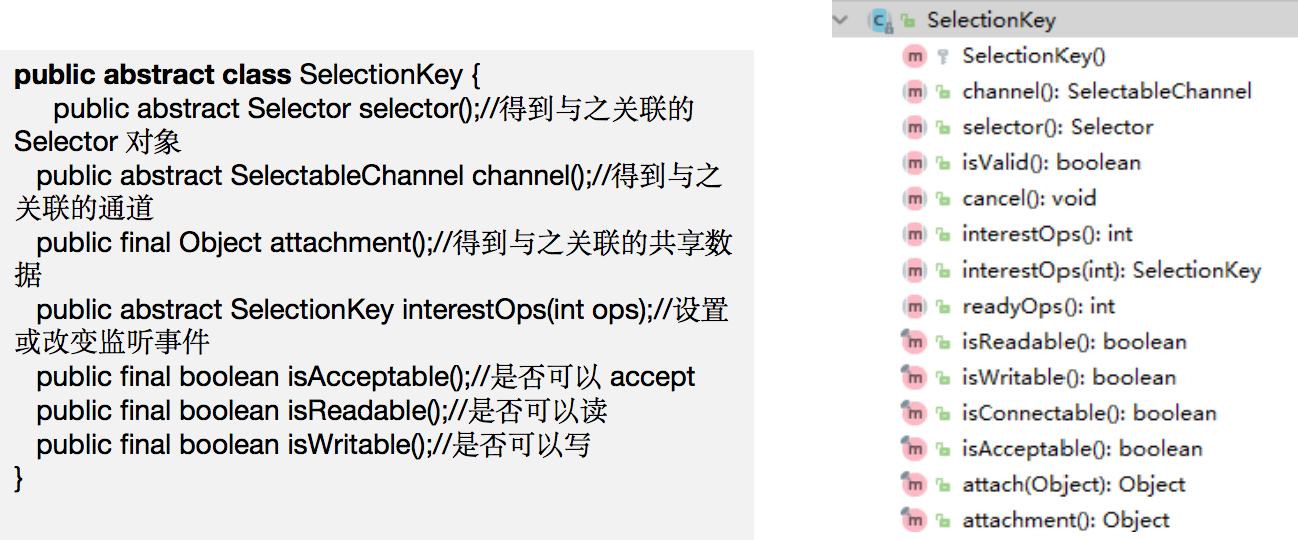
11 ServerSocketChannel
ServerSocketChannel在服务器端监听新的客户端Socket连接- 相关方法如下
12 SocketChannel
SocketChannel,网络IO通道,具体负责进行读写操作。NIO把缓冲区的数据写入通道,或者把通道里的数据读到缓冲区。- 相关方法如下
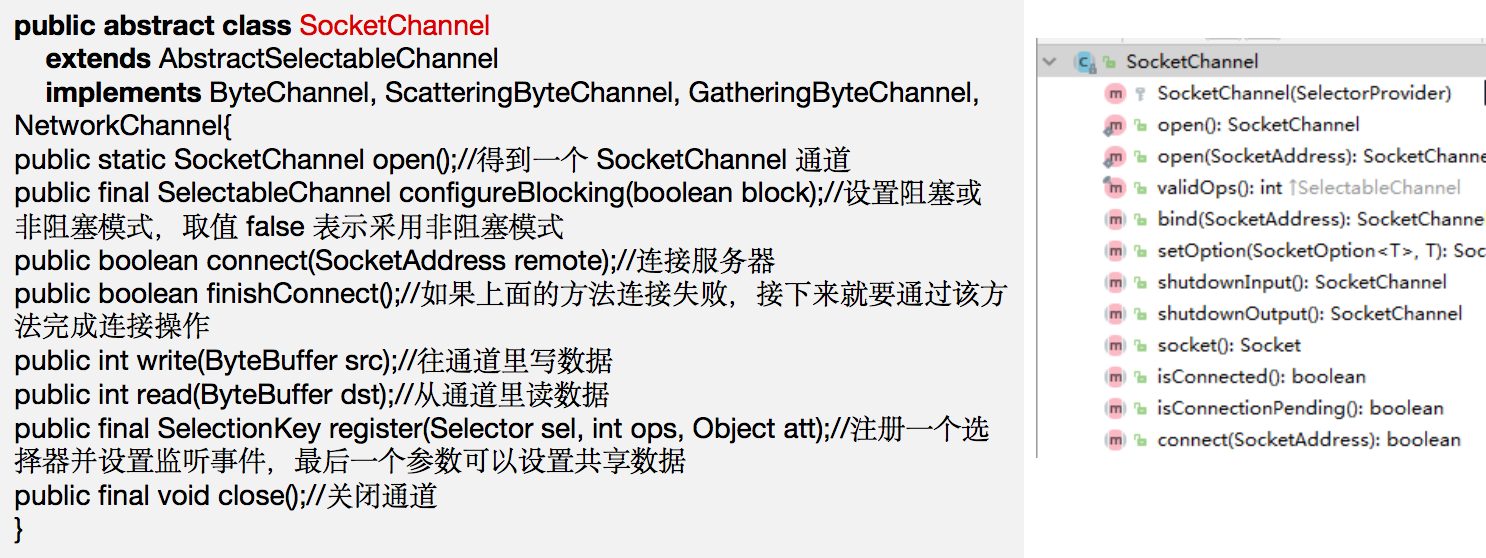
13 NIO 网络编程应用实例 - 群聊系统
实例要求:
- 编写一个
NIO群聊系统,实现服务器端和客户端之间的数据简单通讯(非阻塞) - 实现多人群聊
- 服务器端:可以监测用户上线,离线,并实现消息转发功能
- 客户端:通过
Channel可以无阻塞发送消息给其它所有用户,同时可以接受其它用户发送的消息(有服务器转发得到) - 目的:进一步理解
NIO非阻塞网络编程机制 - 示意图分析和代码
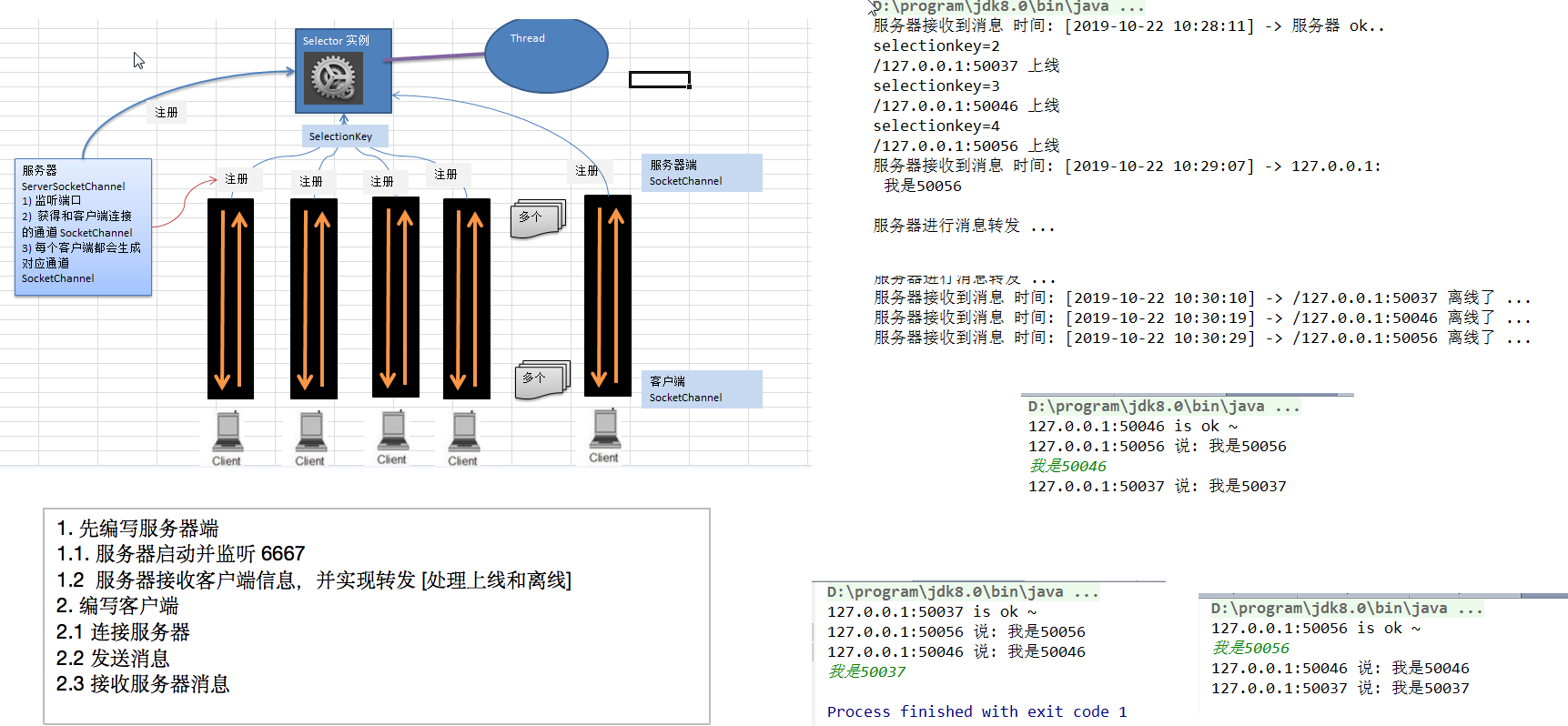
代码:
// 服务端:
import java.io.IOException;
import java.net.InetSocketAddress;
import java.nio.ByteBuffer;
import java.nio.channels.Channel;
import java.nio.channels.SelectionKey;
import java.nio.channels.Selector;
import java.nio.channels.ServerSocketChannel;
import java.nio.channels.SocketChannel;
import java.util.Iterator;

public class GroupChatServer {

    //定义属性
    private Selector selector;
    private ServerSocketChannel listenChannel;

    private static final int PORT = 6667;

    //构造器
    //初始化工作
    public GroupChatServer() {
        try {
            //得到选择器
            selector = Selector.open();
            //ServerSocketChannel
            listenChannel = ServerSocketChannel.open();
            //绑定端口
            listenChannel.socket().bind(new InetSocketAddress(PORT));
            //设置非阻塞模式
            listenChannel.configureBlocking(false);
            //将该 listenChannel 注册到 selector
            listenChannel.register(selector, SelectionKey.OP_ACCEPT);
        } catch (IOException e) {
            e.printStackTrace();
        }
    }

    public void listen() {
        try {
            //循环处理
            while (true) {
                int count = selector.select();
                if (count > 0) { //有事件处理
                    // 遍历得到 selectionKey 集合
                    Iterator<SelectionKey> iterator = selector.selectedKeys().iterator();
                    while (iterator.hasNext()) {
                        //取出 selectionkey
                        SelectionKey key = iterator.next();
                        //监听到 accept
                        if (key.isAcceptable()) {
                            SocketChannel sc = listenChannel.accept();
                            sc.configureBlocking(false);
                            //将该 sc 注册到 seletor
                            sc.register(selector, SelectionKey.OP_READ);
                            //提示
                            System.out.println(sc.getRemoteAddress() + " 上线 ");
                        }
                        if (key.isReadable()) {//通道发送read事件,即通道是可读的状态
                            // 处理读(专门写方法..)
                            readData(key);
                        }
                        //当前的 key 删除,防止重复处理
                        iterator.remove();
                    }
                } else {
                    System.out.println("等待....");
                }
            }
        } catch (Exception e) {
            e.printStackTrace();
        } finally {
            //发生异常处理....
        }
    }

    //读取客户端消息
    public void readData(SelectionKey key) {
        SocketChannel channel = null;
        try {
            //得到 channel
            channel = (SocketChannel) key.channel();
            //创建 buffer
            ByteBuffer buffer = ByteBuffer.allocate(1024);
            int count = channel.read(buffer);
            //根据 count 的值做处理
            if (count > 0) {
                //把缓存区的数据转成字符串
                String msg = new String(buffer.array());
                //输出该消息
                System.out.println("form客户端:" + msg);
                //向其它的客户端转发消息(去掉自己),专门写一个方法来处理
                sendInfoToOtherClients(msg, channel);
            }
        } catch (IOException e) {
            try {
                System.out.println(channel.getRemoteAddress() + "离线了..");
                //取消注册
                key.cancel();
                //关闭通道
                channel.close();
            } catch (IOException e2) {
                e2.printStackTrace();
            }
        }
    }

    //转发消息给其它客户(通道)
    private void sendInfoToOtherClients(String msg, SocketChannel self) throws IOException {

        System.out.println("服务器转发消息中...");
        //遍历所有注册到 selector 上的 SocketChannel,并排除 self
        for (SelectionKey key : selector.keys()) {
            //通过 key 取出对应的 SocketChannel
            Channel targetChannel = key.channel();
            //排除自己
            if (targetChannel instanceof SocketChannel && targetChannel != self) {
                //转型
                SocketChannel dest = (SocketChannel) targetChannel;
                //将 msg 存储到 buffer
                ByteBuffer buffer = ByteBuffer.wrap(msg.getBytes());
                //将 buffer 的数据写入通道
                dest.write(buffer);
            }
        }
    }

    public static void main(String[] args) {
        //创建服务器对象
        GroupChatServer groupChatServer = new GroupChatServer();
        groupChatServer.listen();
    }
}

// 客户端:

import java.io.IOException;
import java.net.InetSocketAddress;
import java.nio.ByteBuffer;
import java.nio.channels.SelectionKey;
import java.nio.channels.Selector;
import java.nio.channels.SocketChannel;
import java.util.Iterator;
import java.util.Scanner;

public class GroupChatClient {

    //定义相关的属性
    private final String HOST = "127.0.0.1";//服务器的ip
    private final int PORT = 6667;//服务器端口
    private Selector selector;
    private SocketChannel socketChannel;
    private String username;

    //构造器,完成初始化工作
    public GroupChatClient() throws IOException {

        selector = Selector.open();
        //连接服务器
        socketChannel = SocketChannel.open(new InetSocketAddress(HOST, PORT));
        //设置非阻塞
        socketChannel.configureBlocking(false);
        //将 channel 注册到selector
        socketChannel.register(selector, SelectionKey.OP_READ);
        //得到 username
        username = socketChannel.getLocalAddress().toString().substring(1);
        System.out.println(username + " is ok...");
    }

    //向服务器发送消息
    public void sendInfo(String info) {
        info = username + " 说:" + info;
        try {
            socketChannel.write(ByteBuffer.wrap(info.getBytes()));
        } catch (IOException e) {
            e.printStackTrace();
        }
    }

    //读取从服务器端回复的消息
    public void readInfo() {
        try {
            int readChannels = selector.select();
            if (readChannels > 0) {//有可以用的通道
                Iterator<SelectionKey> iterator = selector.selectedKeys().iterator();
                while (iterator.hasNext()) {
                    SelectionKey key = iterator.next();
                    if (key.isReadable()) {
                        //得到相关的通道
                        SocketChannel sc = (SocketChannel) key.channel();
                        //得到一个 Buffer
                        ByteBuffer buffer = ByteBuffer.allocate(1024);
                        //读取
                        sc.read(buffer);
                        //把读到的缓冲区的数据转成字符串
                        String msg = new String(buffer.array());
                        System.out.println(msg.trim());
                    }
                }
                iterator.remove(); //删除当前的 selectionKey,防止重复操作
            } else {
                //System.out.println("没有可以用的通道...");
            }
        } catch (Exception e) {
            e.printStackTrace();
        }
    }

    public static void main(String[] args) throws Exception {

        //启动我们客户端
        GroupChatClient chatClient = new GroupChatClient();
        //启动一个线程,每个 3 秒,读取从服务器发送数据
        new Thread() {
            public void run() {
                while (true) {
                    chatClient.readInfo();
                    try {
                        Thread.currentThread().sleep(3000);
                    } catch (InterruptedException e) {
                        e.printStackTrace();
                    }
                }
            }
        }.start();

        //发送数据给服务器端
        Scanner scanner = new Scanner(System.in);
        while (scanner.hasNextLine()) {
            String s = scanner.nextLine();
            chatClient.sendInfo(s);
        }
    }
}
14 NIO 与零拷贝
14.1 零拷贝基本介绍
- 零拷贝是网络编程的关键,很多性能优化都离不开。
- 在
Java程序中,常用的零拷贝有mmap(内存映射)和sendFile。那么,他们在OS里,到底是怎么样的一个的设计?我们分析mmap和sendFile这两个零拷贝 - 另外我们看下
NIO中如何使用零拷贝
14.2 传统 IO 数据读写
Java 传统 IO 和网络编程的一段代码
File file = new File("test.txt");
RandomAccessFile raf = new RandomAccessFile(file, "rw");

byte[] arr = new byte[(int) file.length()];
raf.read(arr);

Socket socket = new ServerSocket(8080).accept();
socket.getOutputStream().write(arr);
14.3 传统 IO 模型
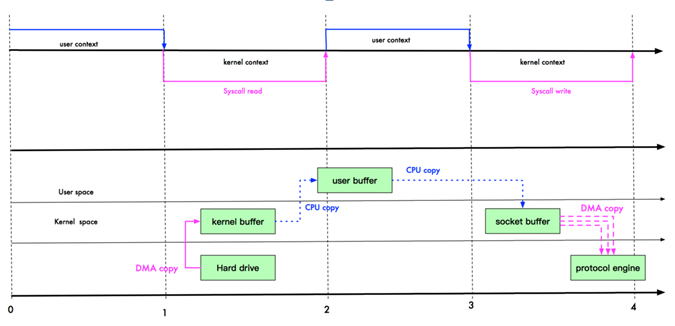
DMA:direct memory access 直接内存拷贝(不使用 CPU)
14.4 mmap 优化
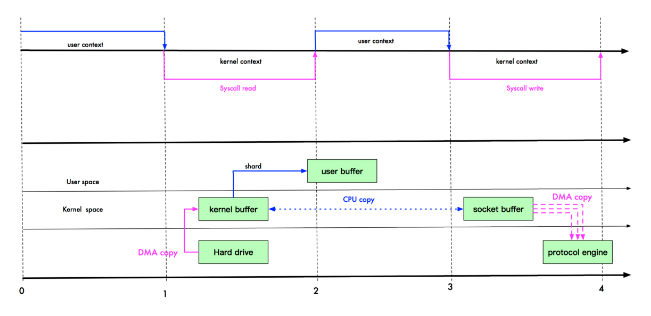
mmap通过内存映射,将文件映射到内核缓冲区,同时,用户空间可以共享内核空间的数据。这样,在进行网络传输时,就可以减少内核空间到用户空间的拷贝次数。如下图mmap示意图
14.5 sendFile 优化
Linux2.1版本提供了sendFile函数,其基本原理如下:数据根本不经过用户态,直接从内核缓冲区进入到SocketBuffer,同时,由于和用户态完全无关,就减少了一次上下文切换- 示意图和小结
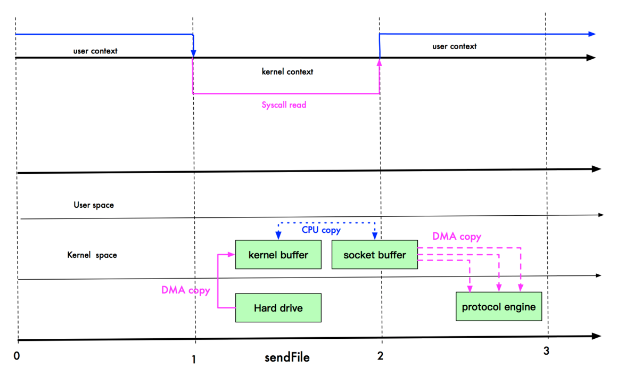
- 提示:零拷贝从操作系统角度,是没有
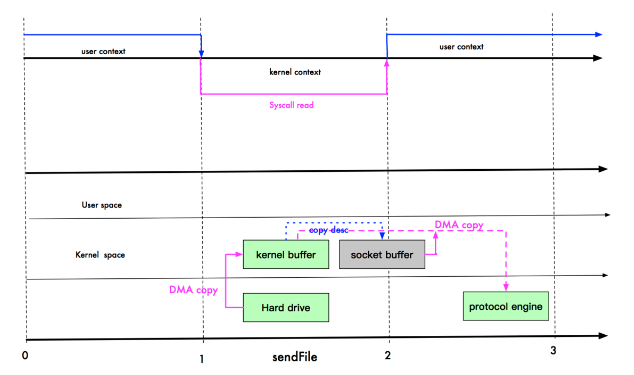
cpu拷贝 Linux在2.4版本中,做了一些修改,避免了从内核缓冲区拷贝到Socketbuffer的操作,直接拷贝到协议栈,从而再一次减少了数据拷贝。具体如下图和小结:
- 这里其实有一次
cpu拷贝kernel buffer->socket buffer但是,拷贝的信息很少,比如lenght、offset消耗低,可以忽略
14.6 零拷贝的再次理解
- 我们说零拷贝,是从操作系统的角度来说的。因为内核缓冲区之间,没有数据是重复的(只有
kernel buffer有一份数据)。 - 零拷贝不仅仅带来更少的数据复制,还能带来其他的性能优势,例如更少的上下文切换,更少的
CPU缓存伪共享以及无CPU校验和计算。
14.7 mmap 和 sendFile 的区别
mmap适合小数据量读写,sendFile适合大文件传输。mmap需要4次上下文切换,3次数据拷贝;sendFile需要3次上下文切换,最少2次数据拷贝。sendFile可以利用DMA方式,减少CPU拷贝,mmap则不能(必须从内核拷贝到Socket缓冲区)。
14.8 NIO 零拷贝案例
案例要求:
- 使用传统的
IO方法传递一个大文件 - 使用
NIO零拷贝方式传递(transferTo)一个大文件 - 看看两种传递方式耗时时间分别是多少
NewIOServer.java

import java.net.InetSocketAddress;
import java.net.ServerSocket;
import java.nio.ByteBuffer;
import java.nio.channels.ServerSocketChannel;
import java.nio.channels.SocketChannel;

//服务器
public class NewIOServer {

    public static void main(String[] args) throws Exception {
        InetSocketAddress address = new InetSocketAddress(7001);
        ServerSocketChannel serverSocketChannel = ServerSocketChannel.open();
        ServerSocket serverSocket = serverSocketChannel.socket();
        serverSocket.bind(address);

        //创建buffer
        ByteBuffer byteBuffer = ByteBuffer.allocate(4096);

        while (true) {
            SocketChannel socketChannel = serverSocketChannel.accept();
            int readcount = 0;
            while (-1 != readcount) {
                try {
                    readcount = socketChannel.read(byteBuffer);
                } catch (Exception ex) {
                    // ex.printStackTrace();
                    break;
                }
                //
                byteBuffer.rewind(); //倒带 position = 0 mark 作废
            }
        }
    }
}

NewIOClient.java

import java.io.FileInputStream;
import java.net.InetSocketAddress;
import java.nio.channels.FileChannel;
import java.nio.channels.SocketChannel;

public class NewIOClient {

    public static void main(String[] args) throws Exception {
        SocketChannel socketChannel = SocketChannel.open();
        socketChannel.connect(new InetSocketAddress("localhost", 7001));
        String filename = "protoc-6.1-win32.zip";
        //得到一个文件channel
        FileChannel fileChannel = new FileInputStream(filename).getChannel();
        //准备发送
        long startTime = System.currentTimeMillis();
        //在 linux 下一个 transferTo 方法就可以完成传输
        //在 windows 下一次调用 transferTo 只能发送 8m, 就需要分段传输文件,而且要主要
        //传输时的位置=》课后思考...
        //transferTo 底层使用到零拷贝
        long transferCount = fileChannel.transferTo(0, fileChannel.size(), socketChannel);
        System.out.println("发送的总的字节数 = " + transferCount + " 耗时: " + (System.currentTimeMillis() - startTime));

        //关闭
        fileChannel.close();
    }
}
15 Java AIO 基本介绍
JDK7引入了AsynchronousI/O,即AIO。在进行I/O编程中,常用到两种模式:Reactor和Proactor。Java的NIO就是Reactor,当有事件触发时,服务器端得到通知,进行相应的处理AIO即NIO2.0,叫做异步不阻塞的IO。AIO引入异步通道的概念,采用了Proactor模式,简化了程序编写,有效的请求才启动线程,它的特点是先由操作系统完成后才通知服务端程序启动线程去处理,一般适用于连接数较多且连接时间较长的应用- 目前
AIO还没有广泛应用,Netty也是基于NIO,而不是AIO,因此我们就不详解AIO了,有兴趣的同学可以参考《Java新一代网络编程模型AIO原理及Linux系统AIO介绍》
16 BIO、NIO、AIO 对比表
| BIO | NIO | AIO | |
|---|---|---|---|
| IO模型 | 同步阻塞 | 同步非阻塞(多路复用) | 异步非阻塞 |
| 编程难度 | 简单 | 复杂 | 复杂 |
| 可靠性 | 差 | 好 | 好 |
| 吞吐量 | 低 | 高 | 高 |
举例说明
- 同步阻塞:到理发店理发,就一直等理发师,直到轮到自己理发。
- 同步非阻塞:到理发店理发,发现前面有其它人理发,给理发师说下,先干其他事情,一会过来看是否轮到自己.
- 异步非阻塞:给理发师打电话,让理发师上门服务,自己干其它事情,理发师自己来家给你理发